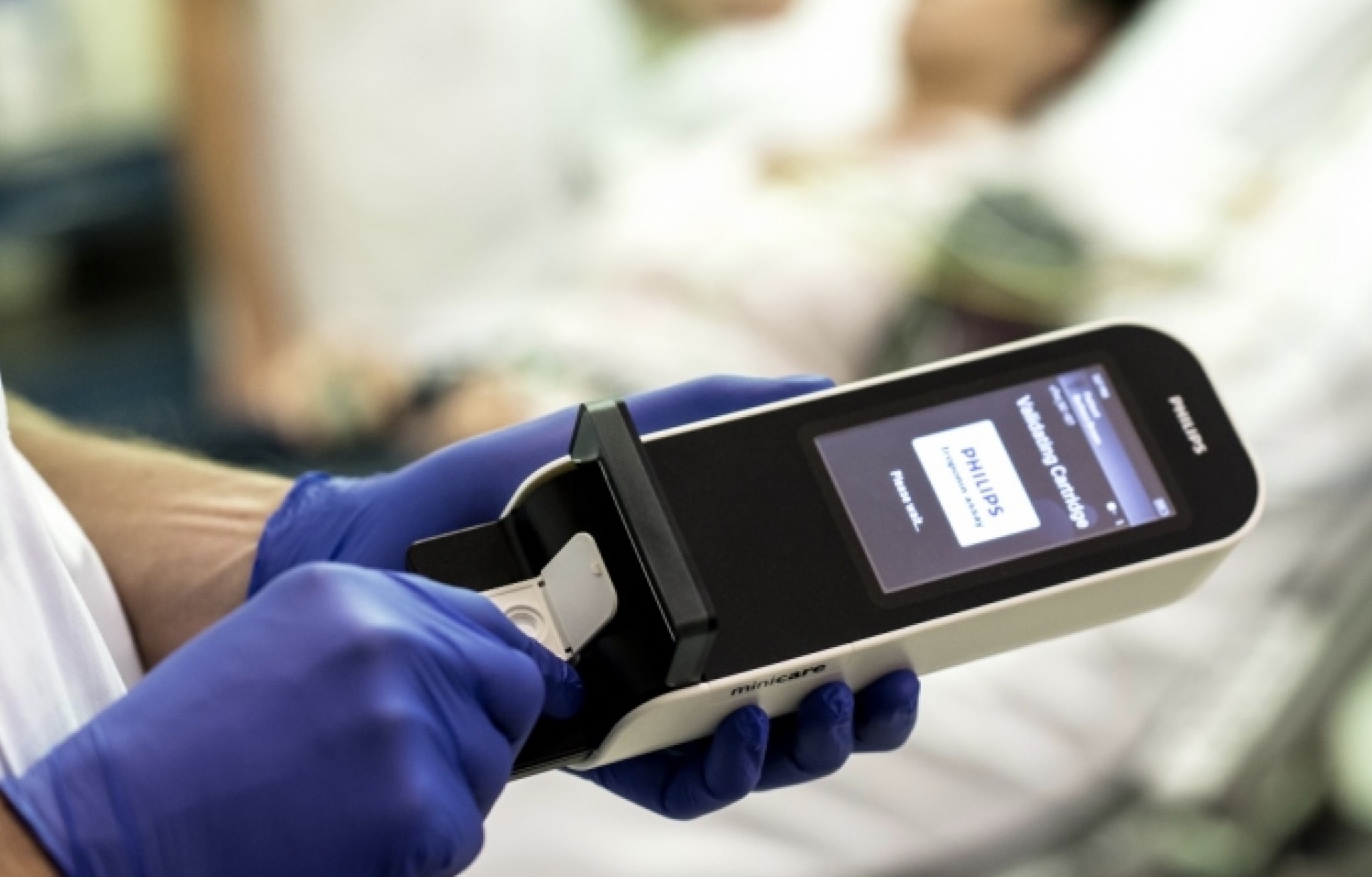
Atellica VTLi is a handheld, point-of-care diagnostic device designed
to deliver rapid immunoassay results directly at the bedside.
Following Siemens Healthineers’ acquisition of Minicare, the product
required a complete UX transformation; not just a visual rebrand,
but
a system-level integration into the Atellica ecosystem.
UI Designer
Software Architecture, Information design, Workflow Systems
Embedded (Microsoft WEC2013)
Project Manager, Software Engineers
October 2019 – February 2020
The existing Minicare system presented three critical challenges:
At the same time, this was not a typical redesign.
This was a regulated medical environment, where:
The core challenge became:
How do we transform an existing medical device UX into a scalable, standardized system without disrupting critical clinical workflows?
As the lead product designer, I worked closely with engineering to:
This required balancing:
Business Goals
Design Goals
System-Driven Design
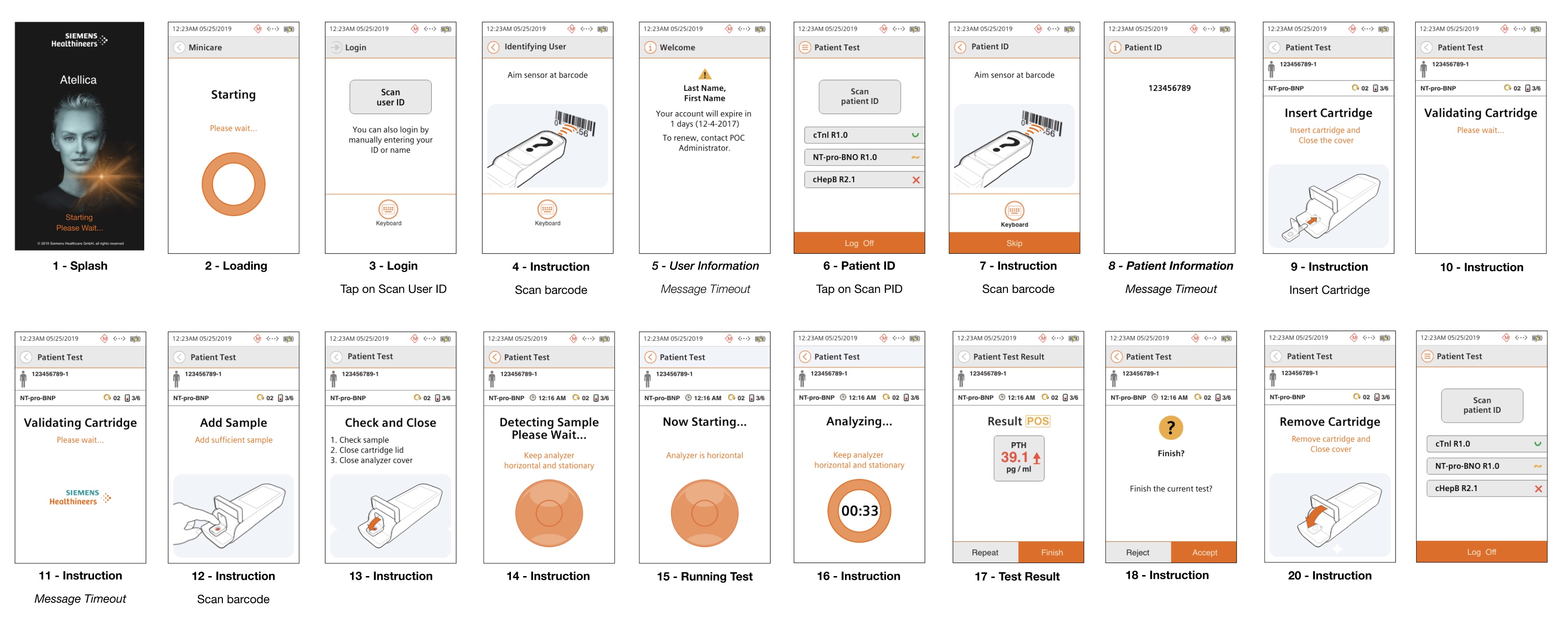
Rather than designing screens in isolation, I approached the product as a connected system of workflows. We broke the product down into core modules:
Each module had:
Design Sprints & Cross-Functional Collaboration
We ran design sprints with engineering, focusing on one workflow at a time.
This allowed us to:
Adapting the Design System (CIP)
The biggest design challenge was not creating a new UI; it was
Adapting the CIP design system to an existing product with legacy constraints.
This meant:
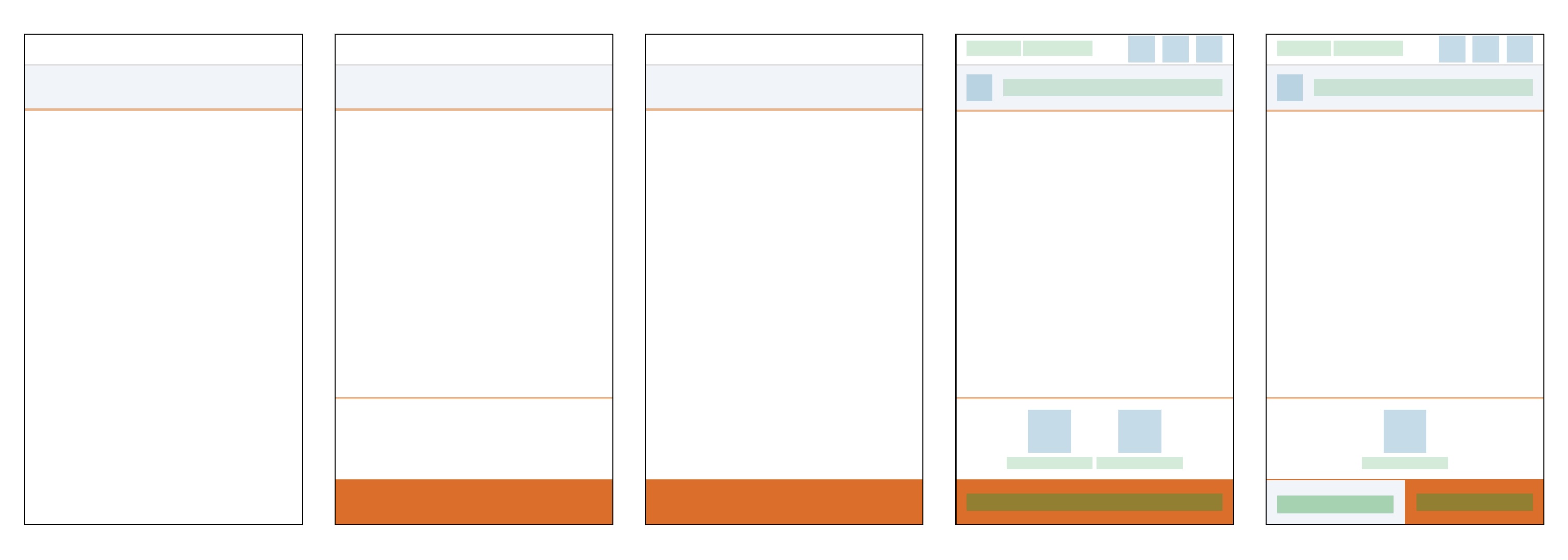
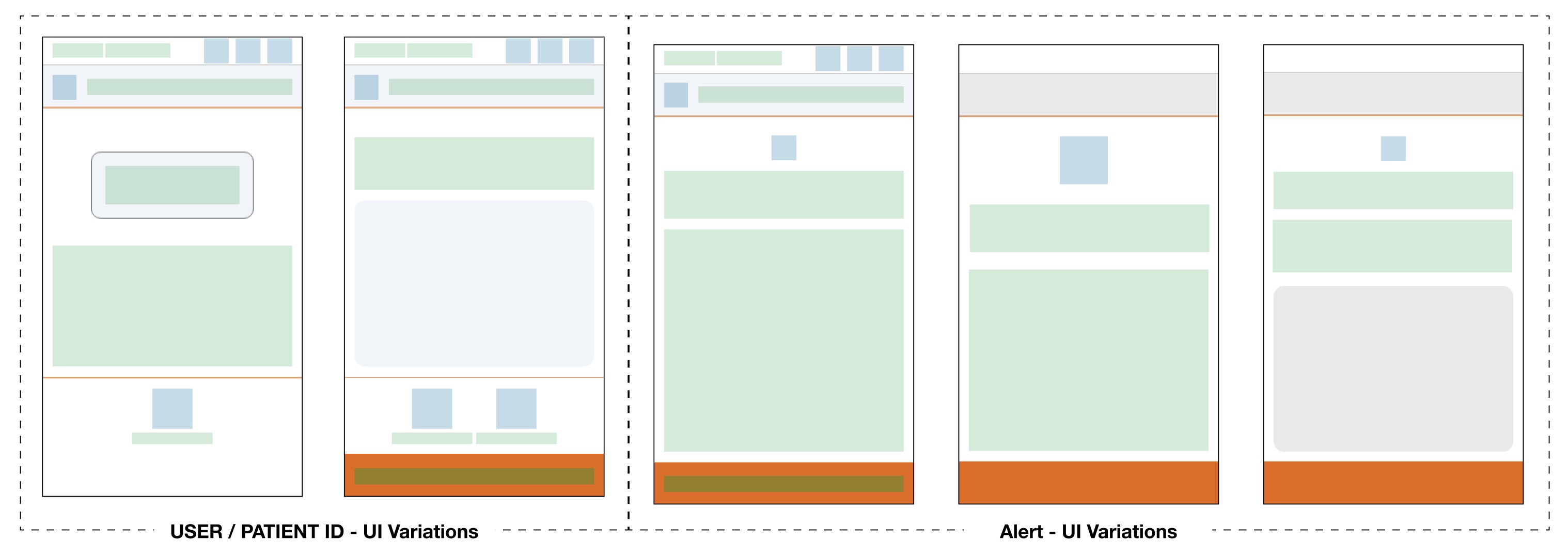
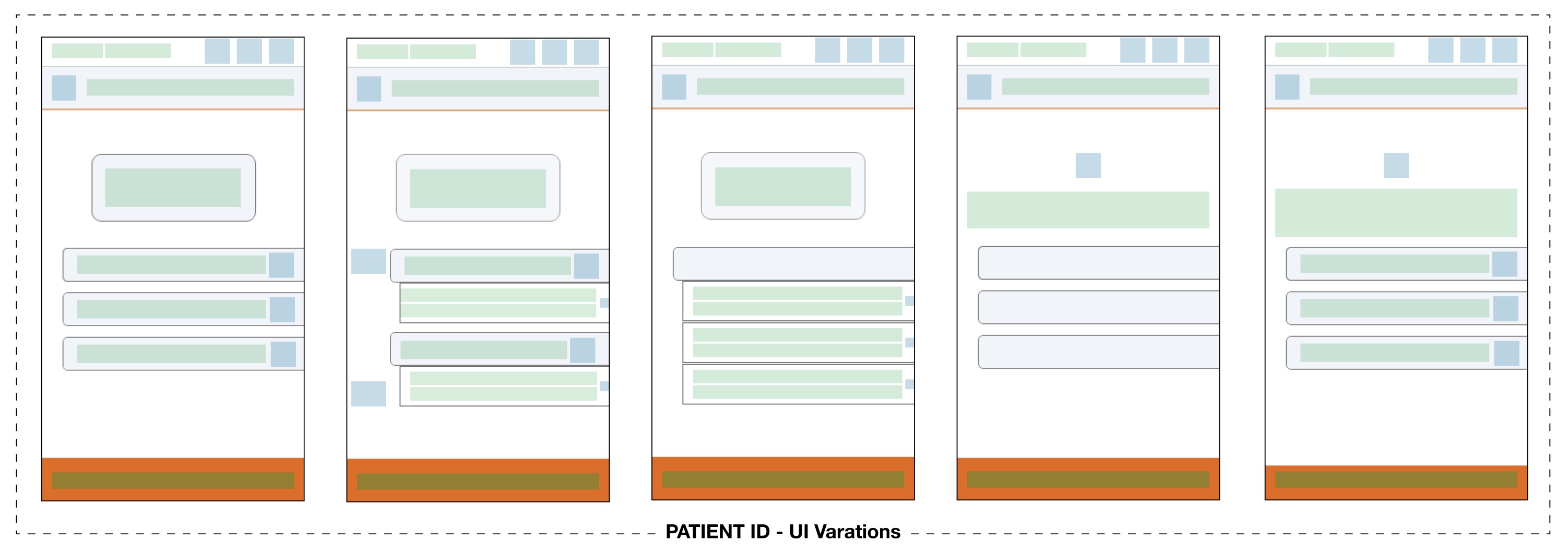
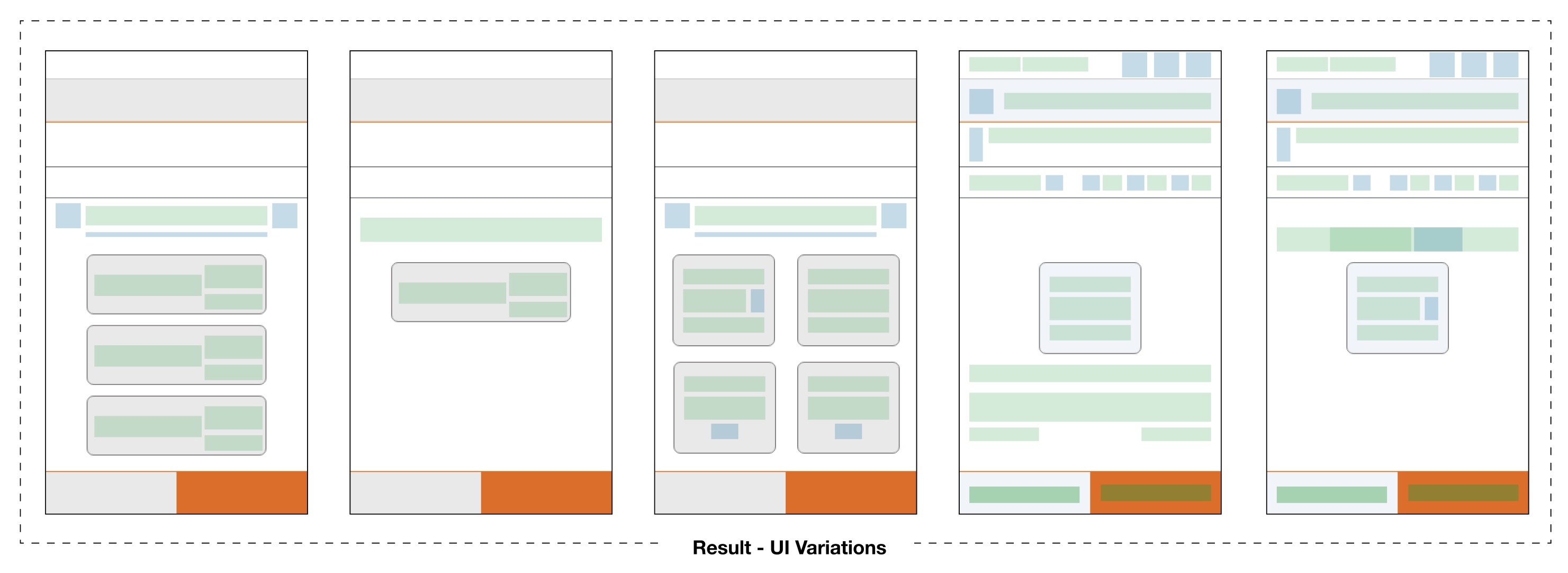
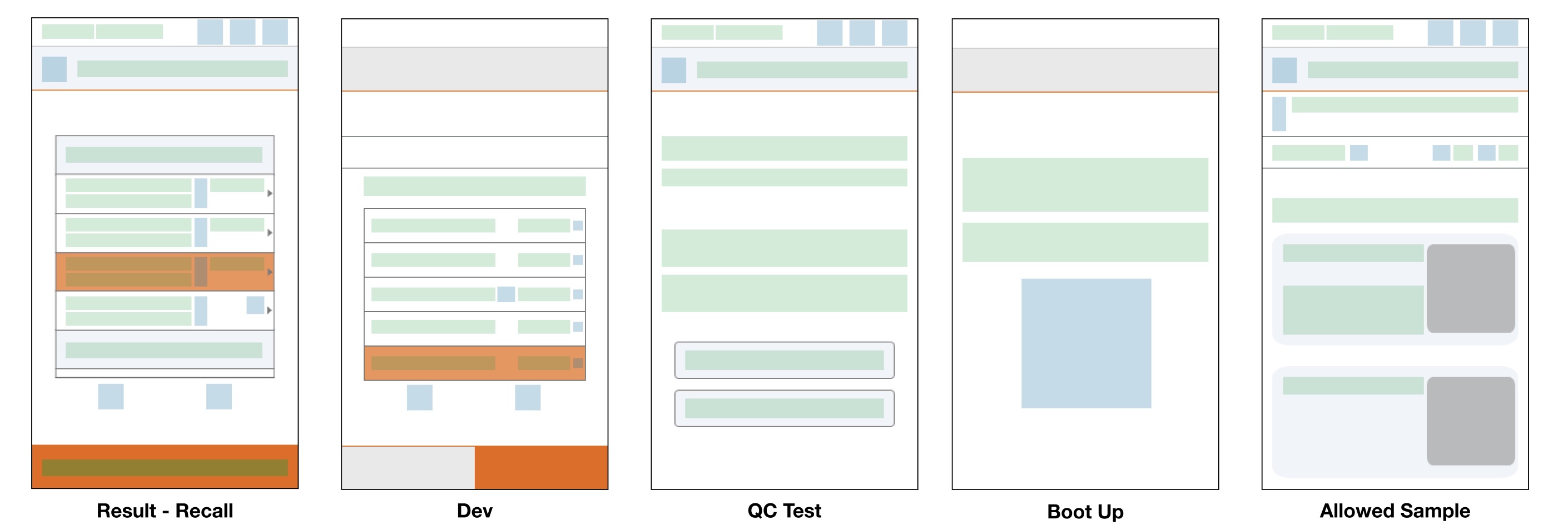
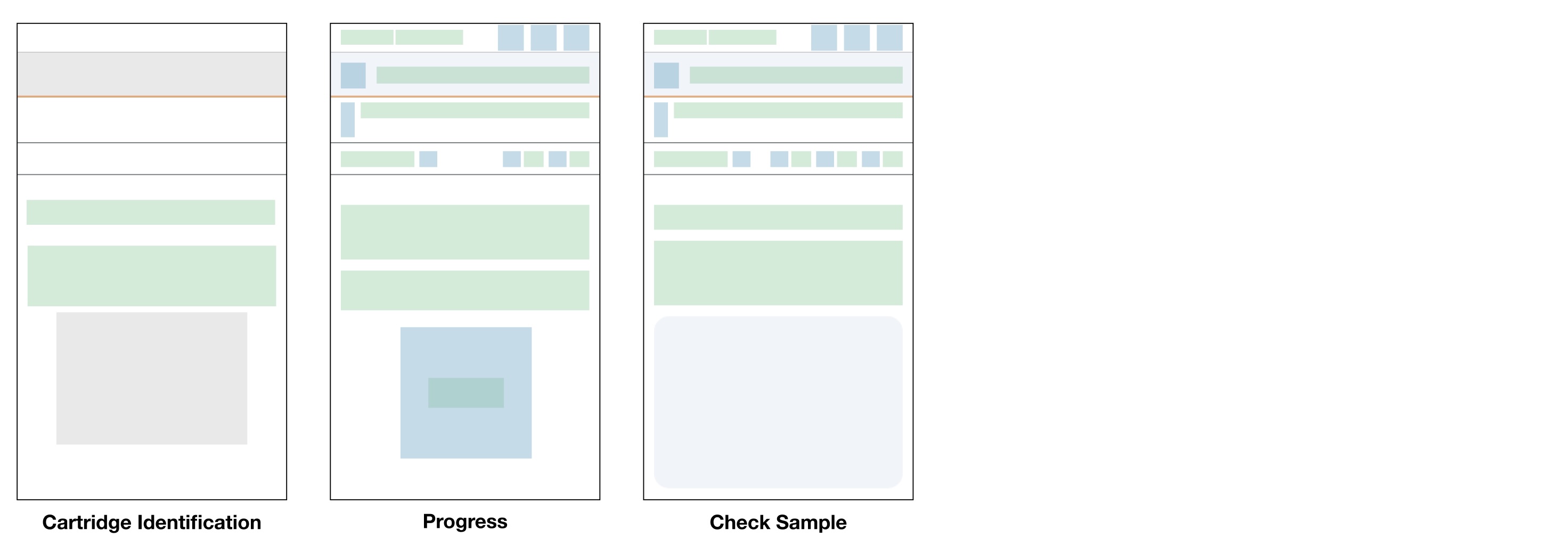
Low-fidelity wireframes were used to explore multiple variations before finalizing direction.
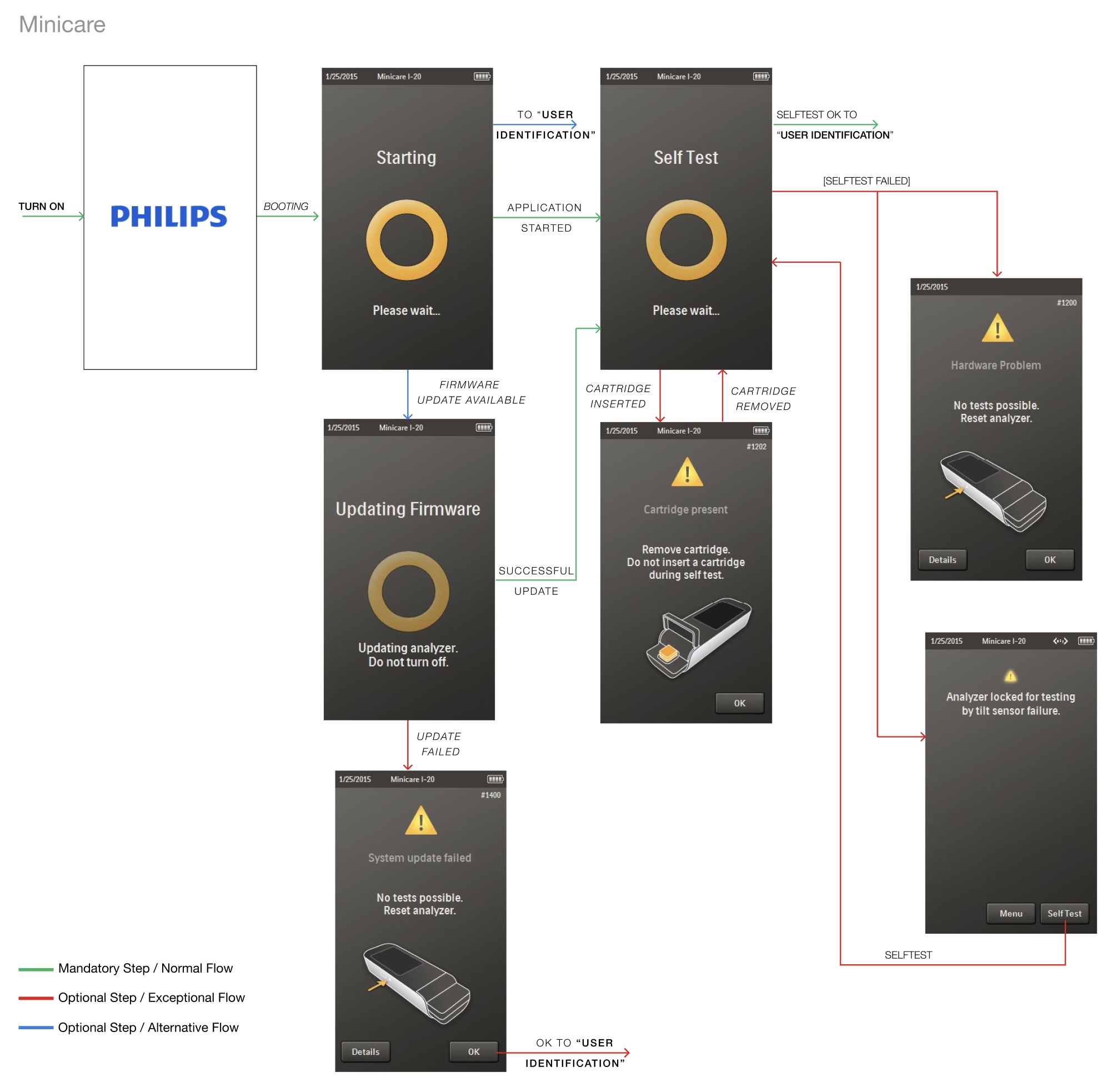
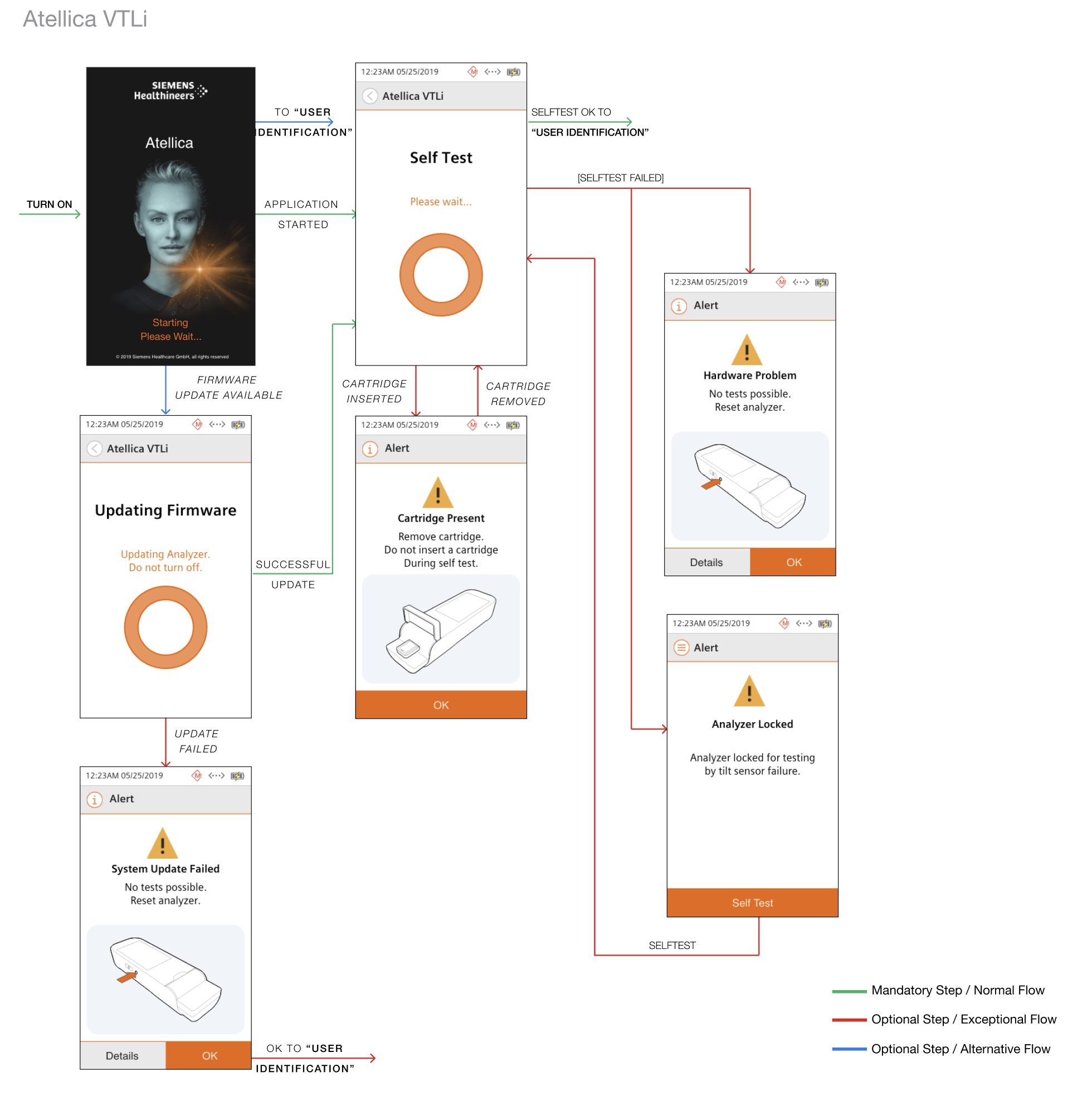
Booting & Self-Test
This is the first interaction clinicians experience. The workflow was redesigned to:
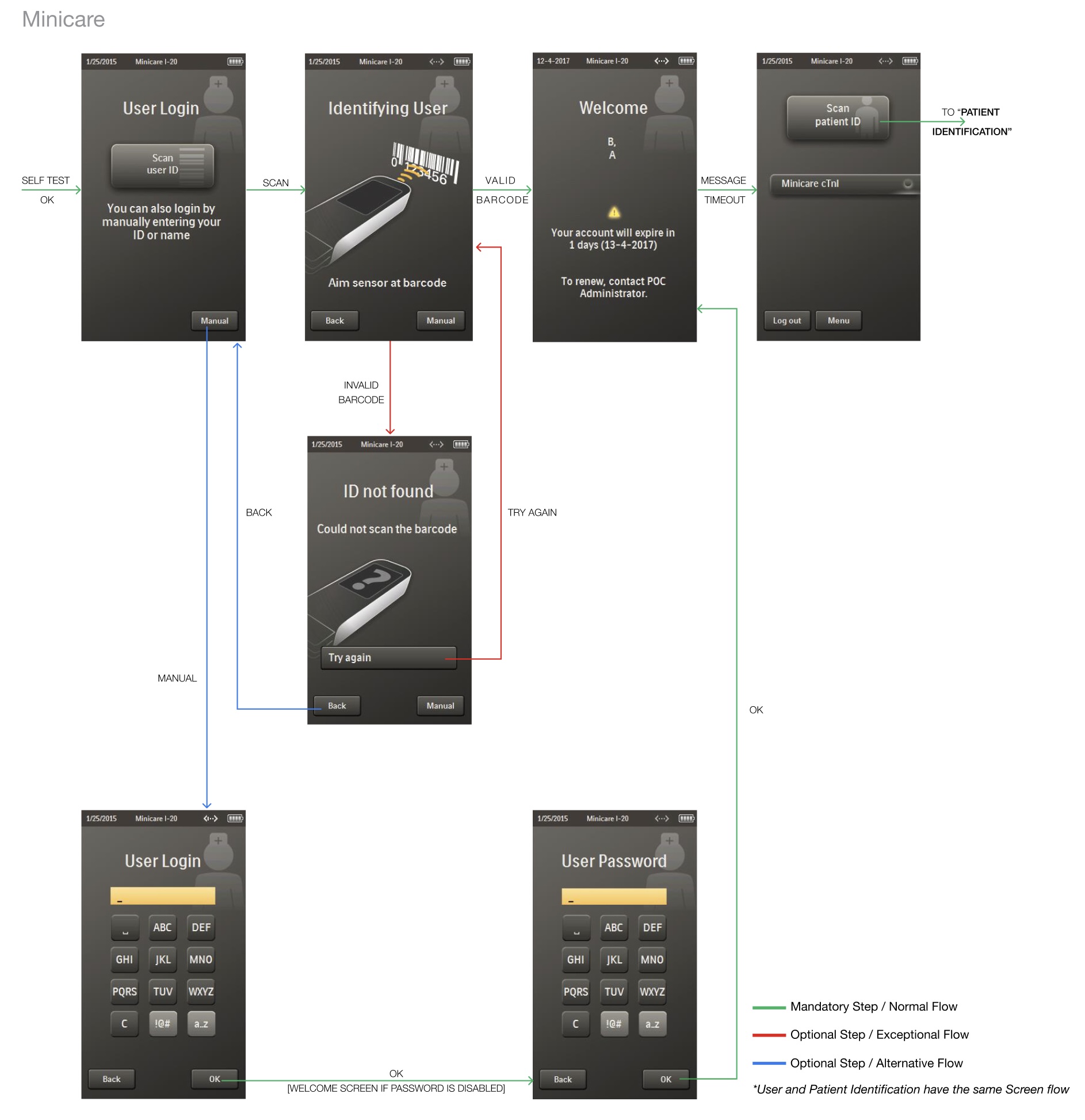
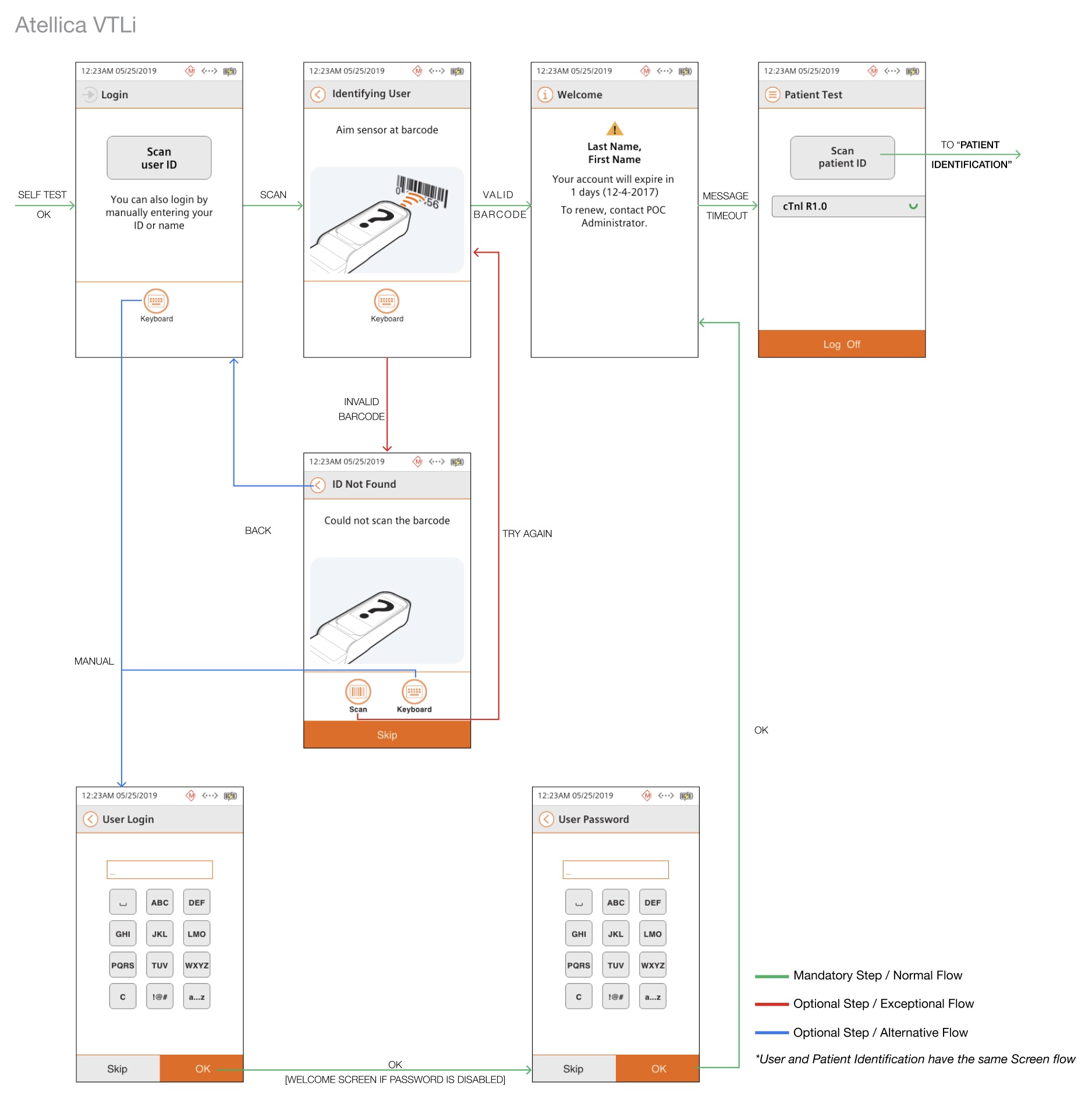
User & Patient Identification
A critical step tied to patient safety. Improvements included:
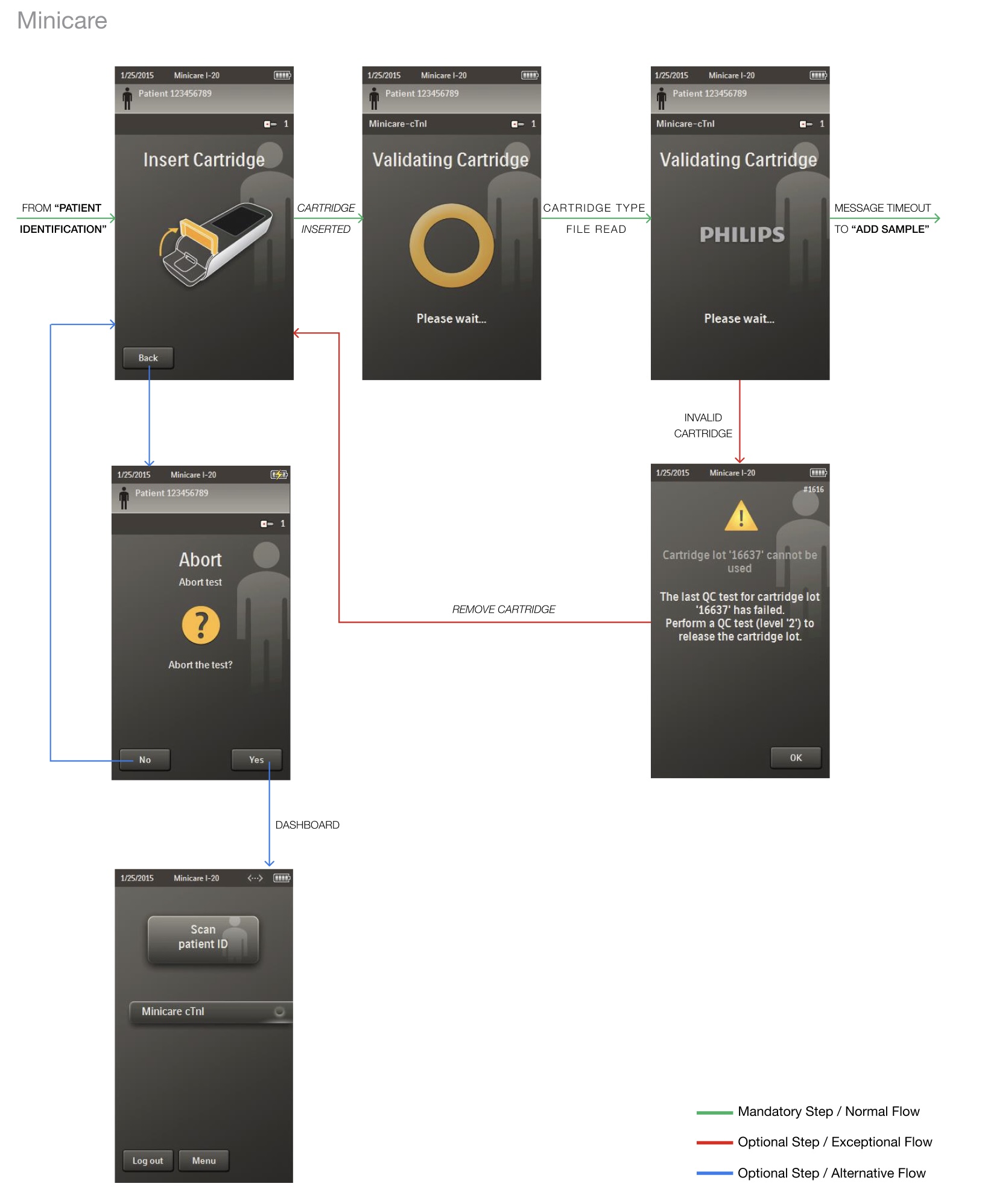
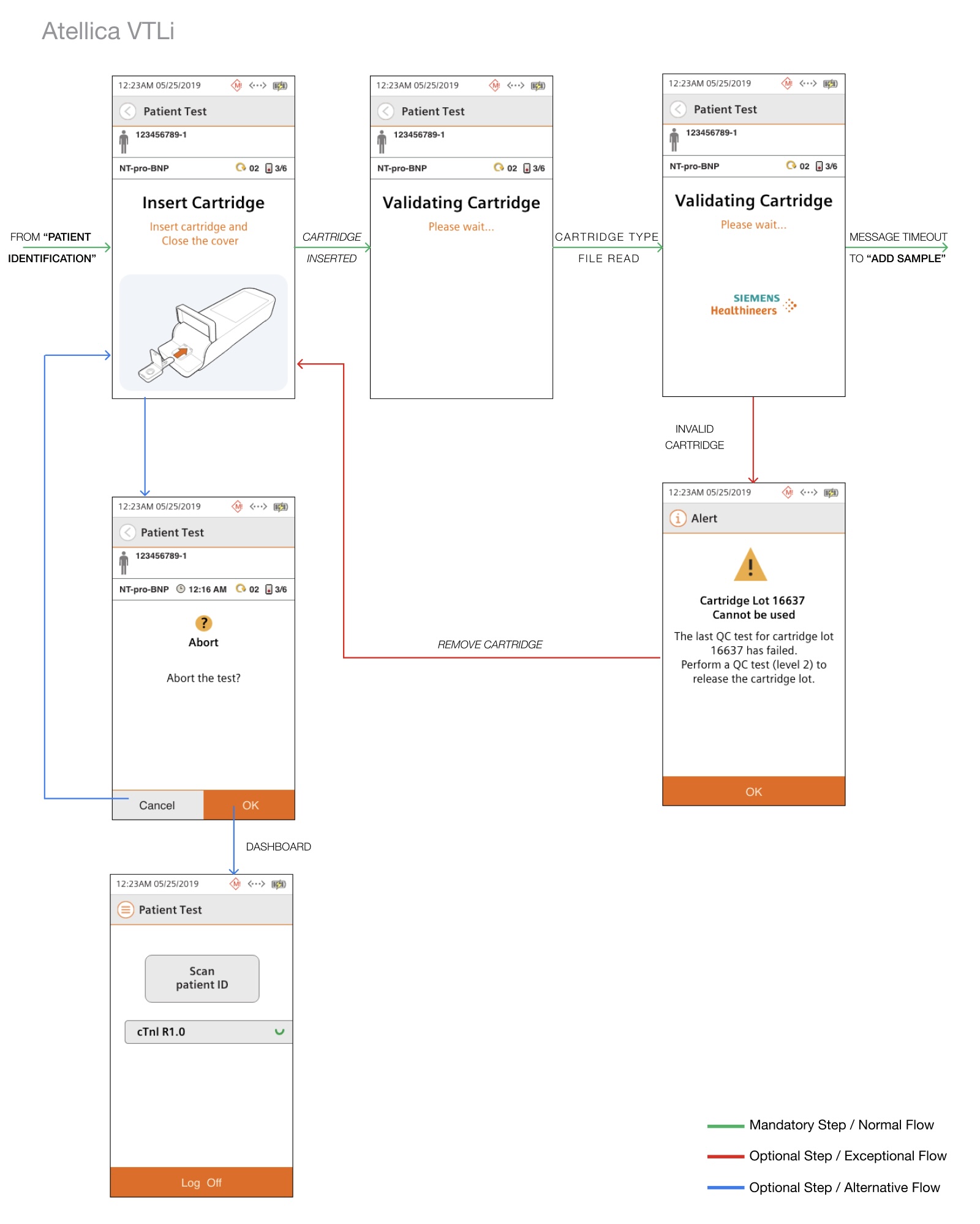
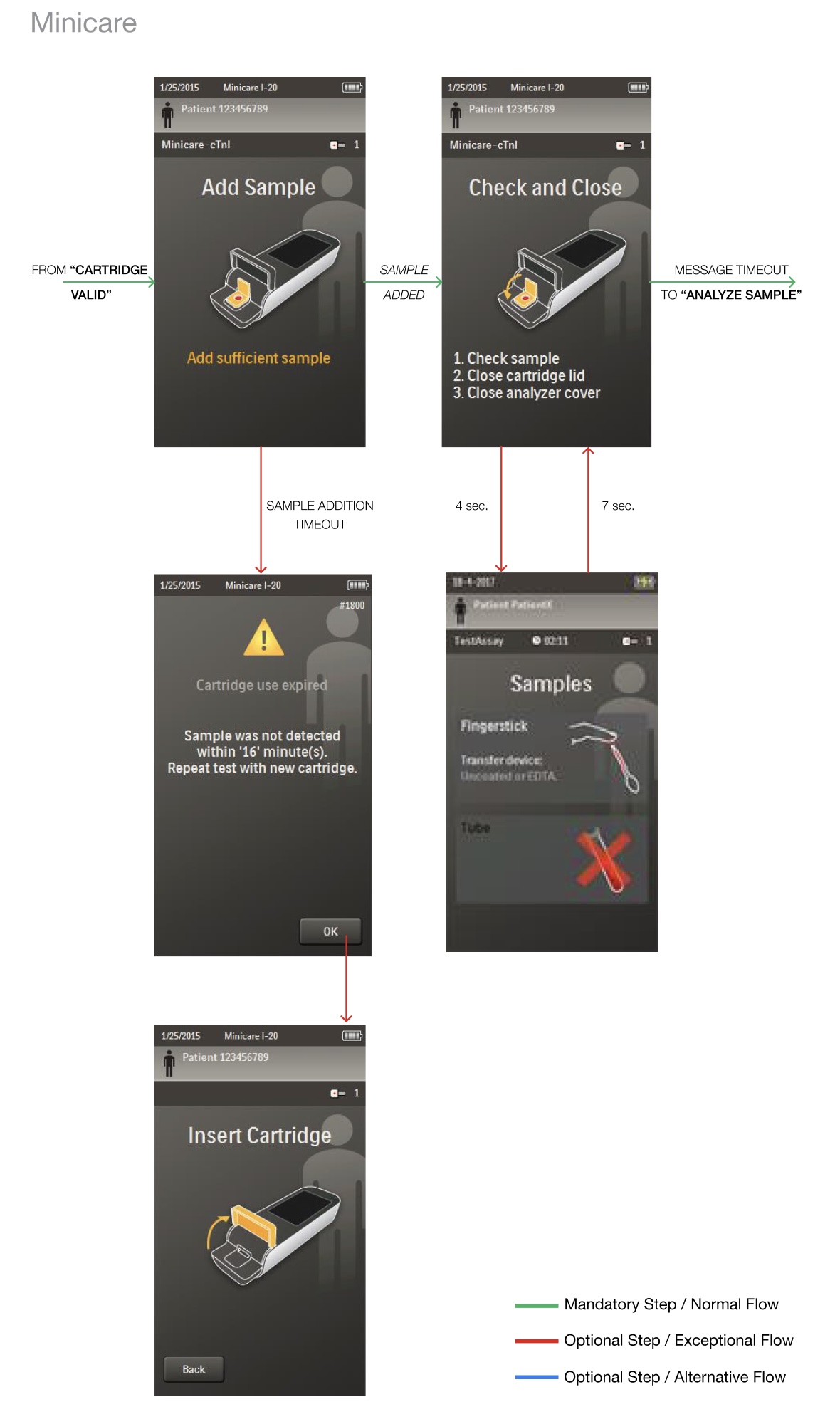
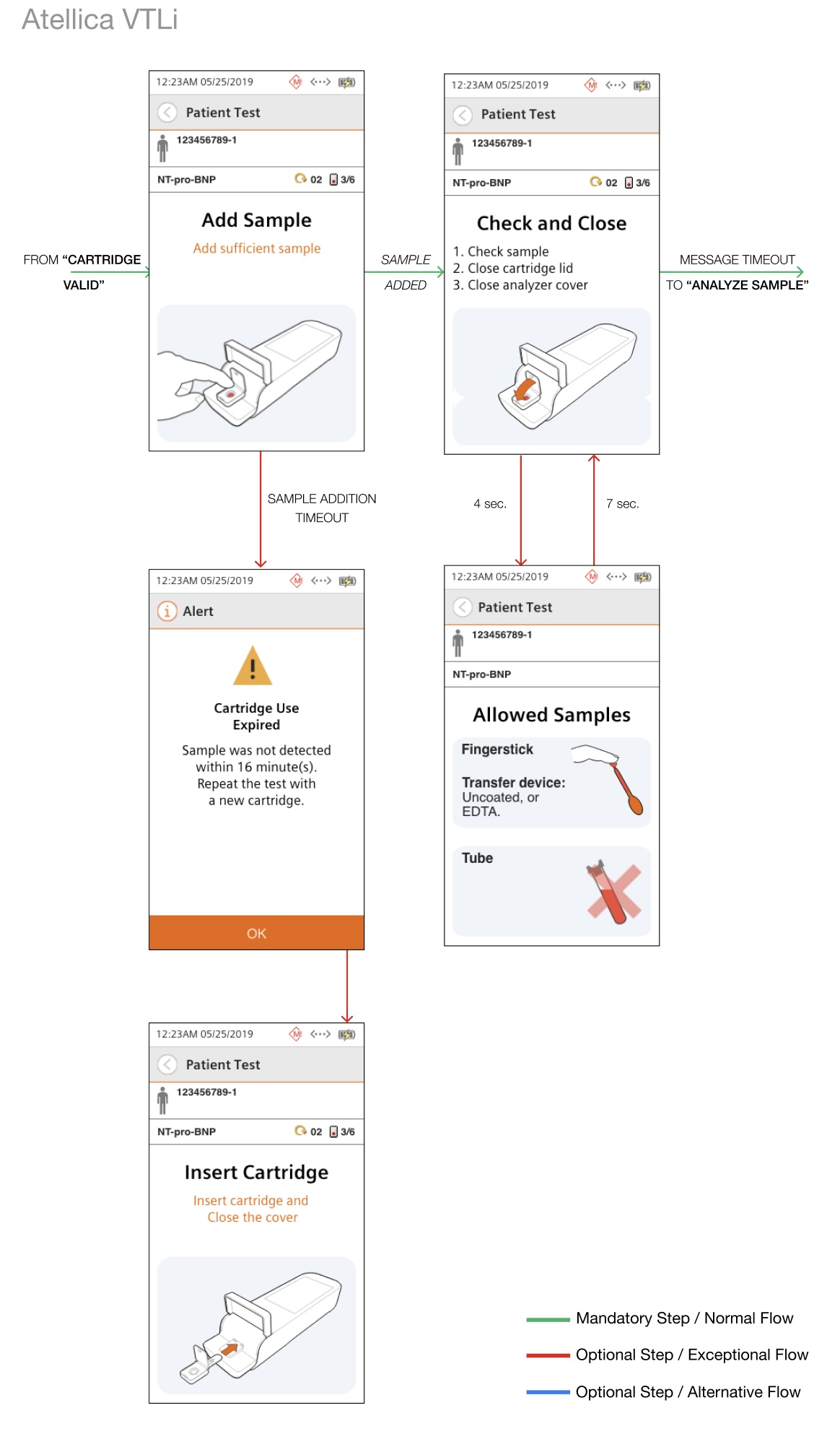
Cartridge & Sample Handling
This stage is highly sensitive to physical interaction + system validation.
Design improvements:
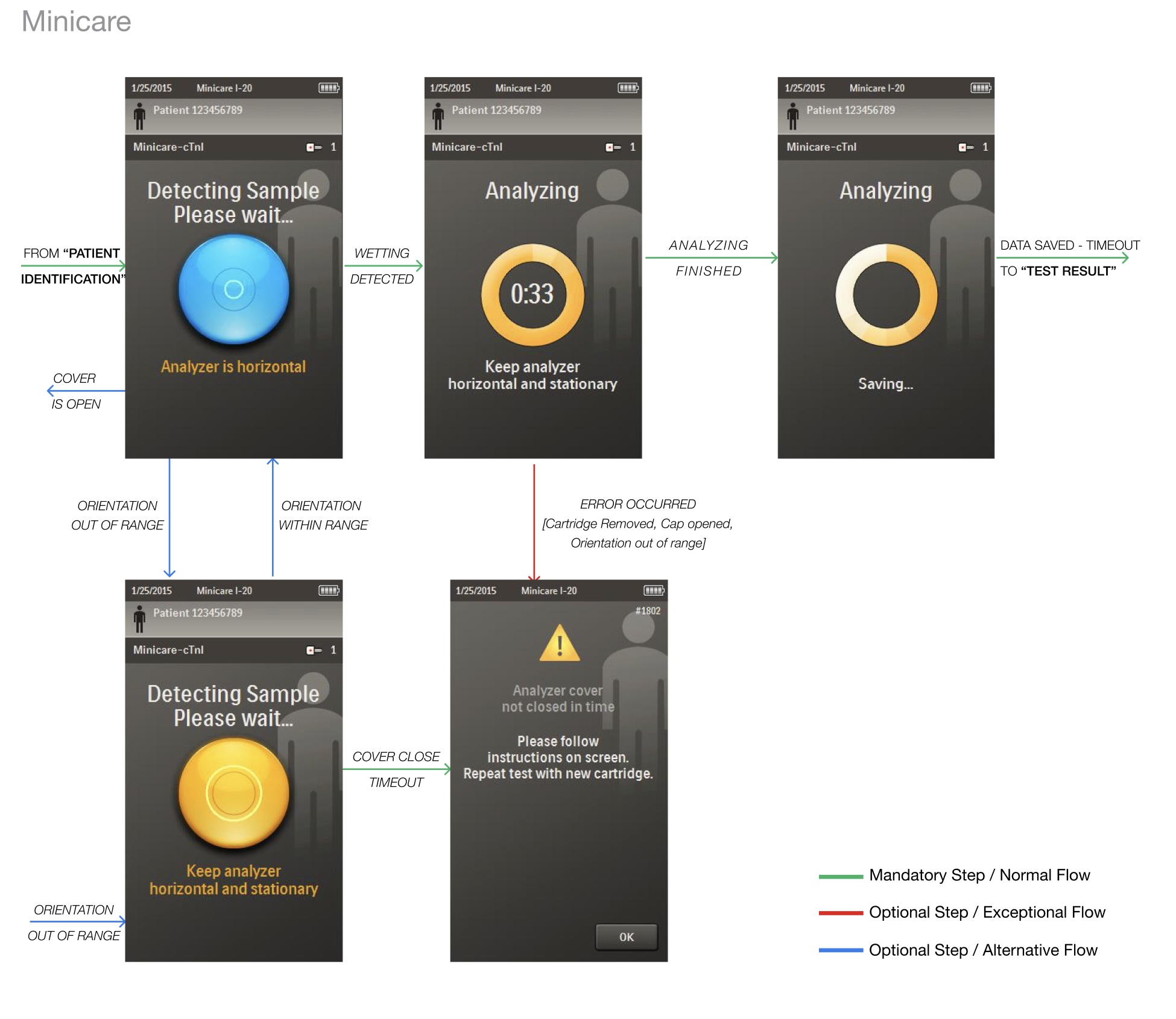
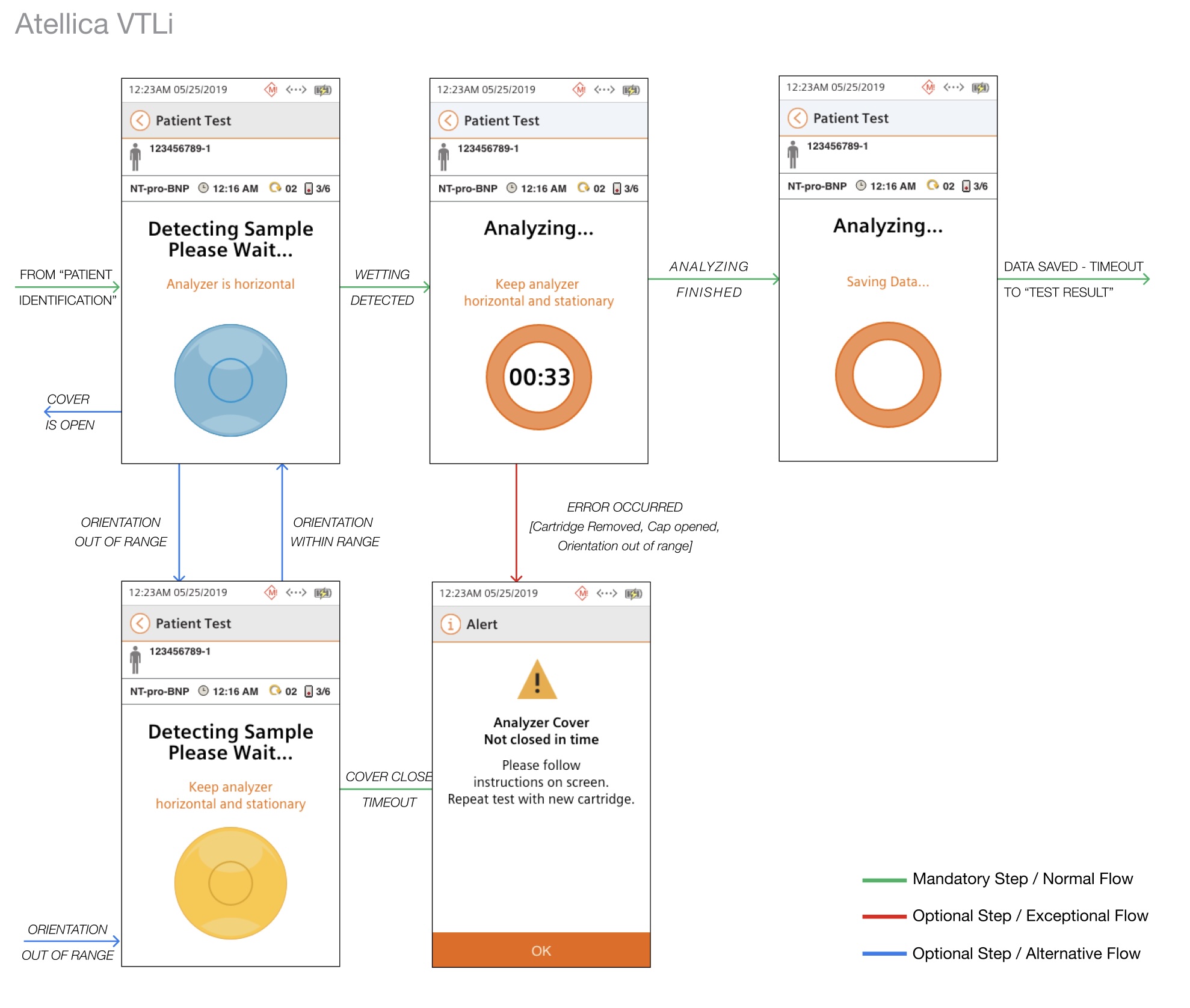
Sample Analysis
A critical moment where users must trust the system. Design improvements:
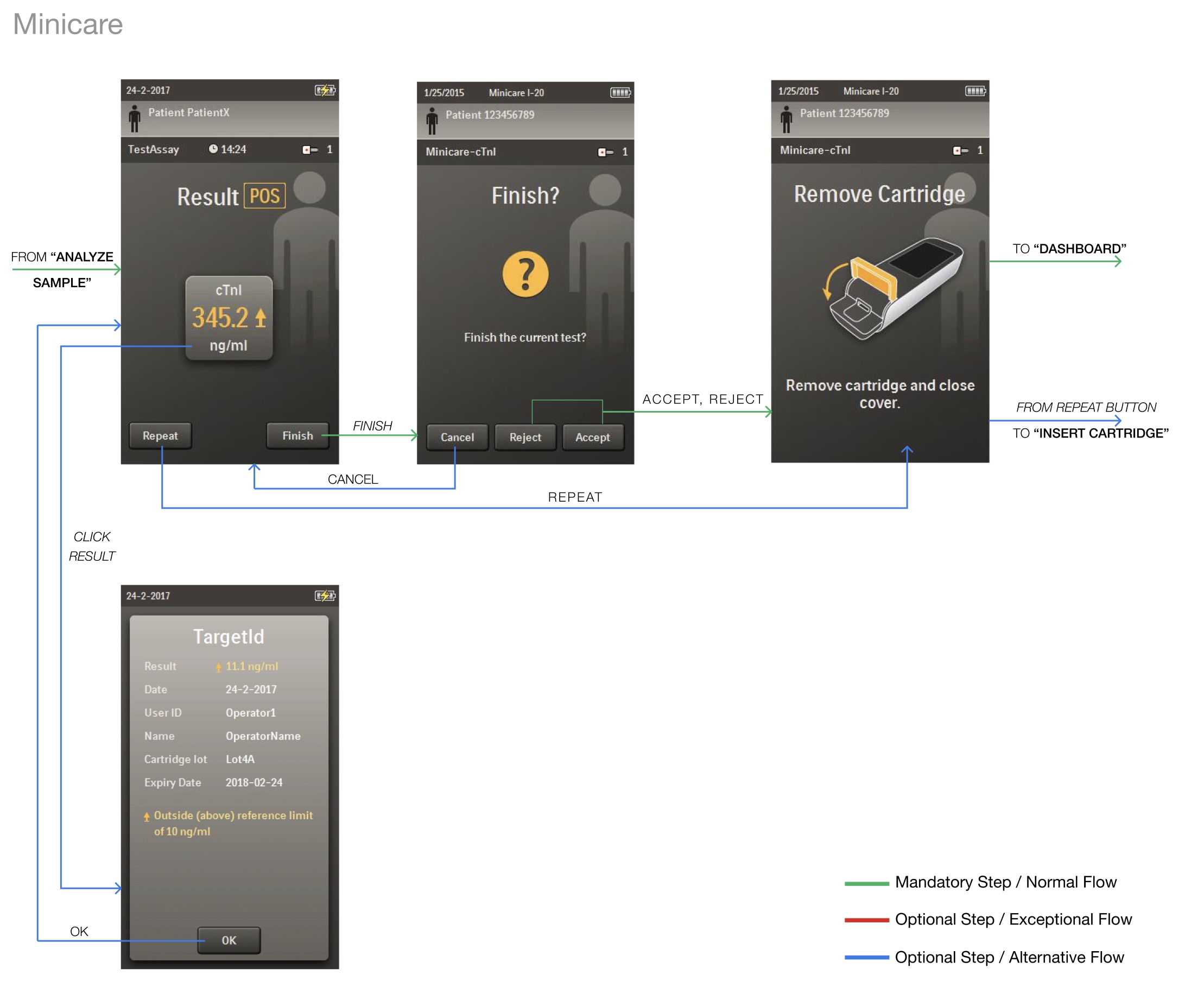
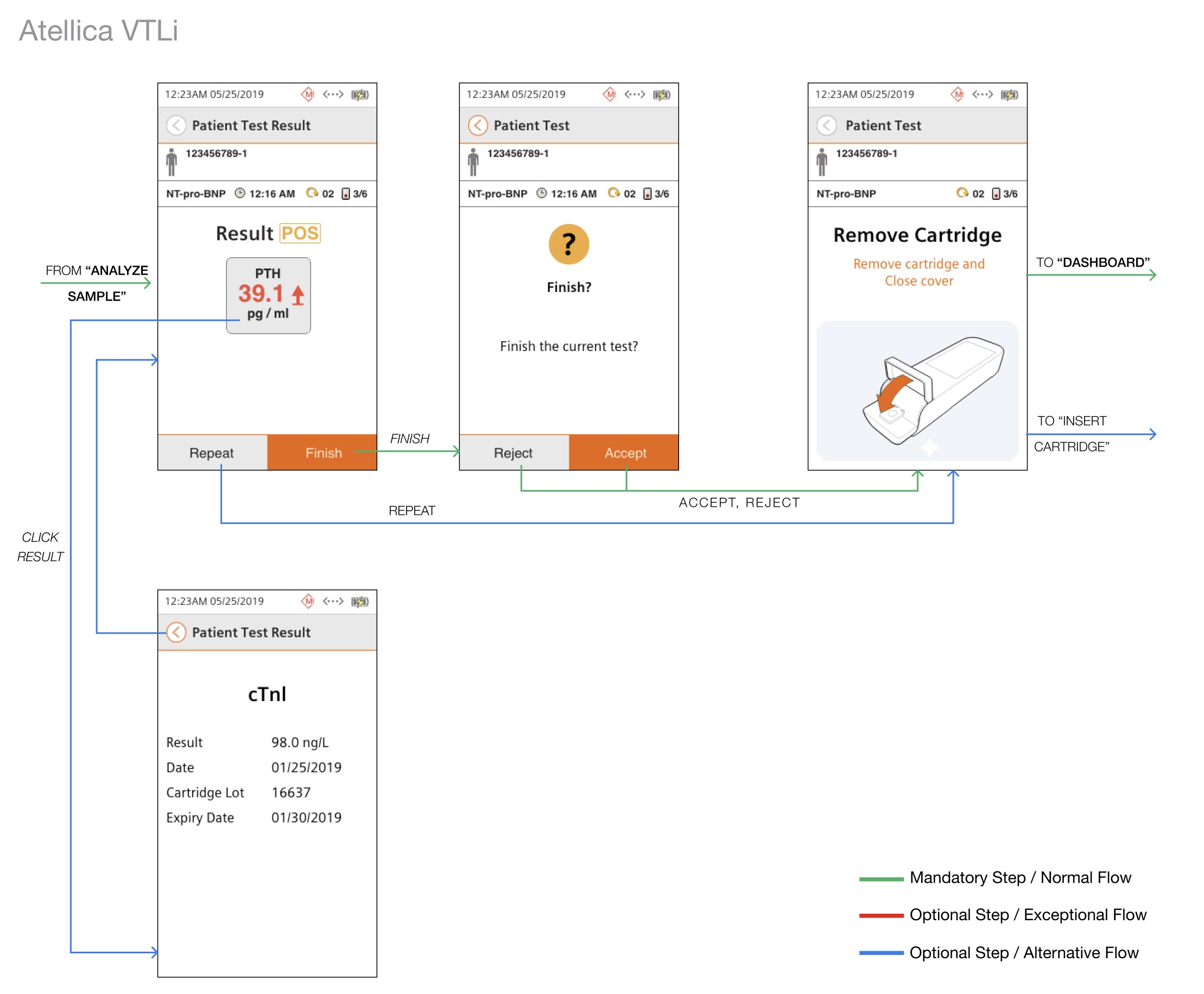
Results & Review
Final step where clinical decisions are made; focused on:
More importantly:
The product became a scalable foundation for future
point-of-care devices within the Atellica ecosystem.
Designing in Regulated Environments Requires Systems Thinking
Every screen is connected to safety,
workflow, and compliance.
Adaptation
The goal was not to redesign everything,
but to evolve an existing system without breaking it.
Break Complexity into Modules
Decomposing workflows into smaller units
allowed faster iteration and better collaboration.